





Your Colorectal Health, Our Priority
With our comprehensive suite of screening services and treatment options, our experienced colorectal specialist and medical team promise you peace of mind whilst ensuring a strong and healthy colon.




Dr Ho Kok Sun
Consultant Colorectal & General Surgeon
Piles, also known as haemorrhoids, are a common condition that affects the blood vessels in and around the anus and lower rectum. Although many people experience piles at some point in their lives, they often delay seeking medical advice due to embarrassment or the belief that the symptoms will resolve on their own.
While mild cases may respond to lifestyle changes, persistent or more severe symptoms may require medical treatment. Understanding what piles are and the treatment options available can help you recognise when it is time to seek professional assessment.
What Are Piles?
Piles are swollen or enlarged veins that develop inside the rectum or around the anus due to increased pressure in the area. This pressure can cause the supporting tissues to weaken over time, allowing the veins to enlarge and become symptomatic.
Piles are generally classified into the following types:
Internal Piles
Internal piles develop inside the rectum and are usually not visible in the early stages. They may cause painless, bright red bleeding during bowel movements, particularly when straining. While some mild internal piles improve without treatment, persistent symptoms may require medical management.
External Piles
External piles develop beneath the skin around the anus and often appear as small, firm lumps. They may cause itching, discomfort or swelling. If a blood clot forms within an external pile (thrombosis), it can lead to sudden, severe pain and swelling.
Prolapsed Piles
Prolapsed piles occur when an internal pile enlarges and protrudes through the anal opening. Mild prolapse may retract on its own after a bowel movement, while more advanced cases may require manual repositioning or remain permanently outside the anus. As prolapse becomes more severe, symptoms such as discomfort, mucus discharge and difficulty maintaining hygiene may become more noticeable.
What Causes Piles?
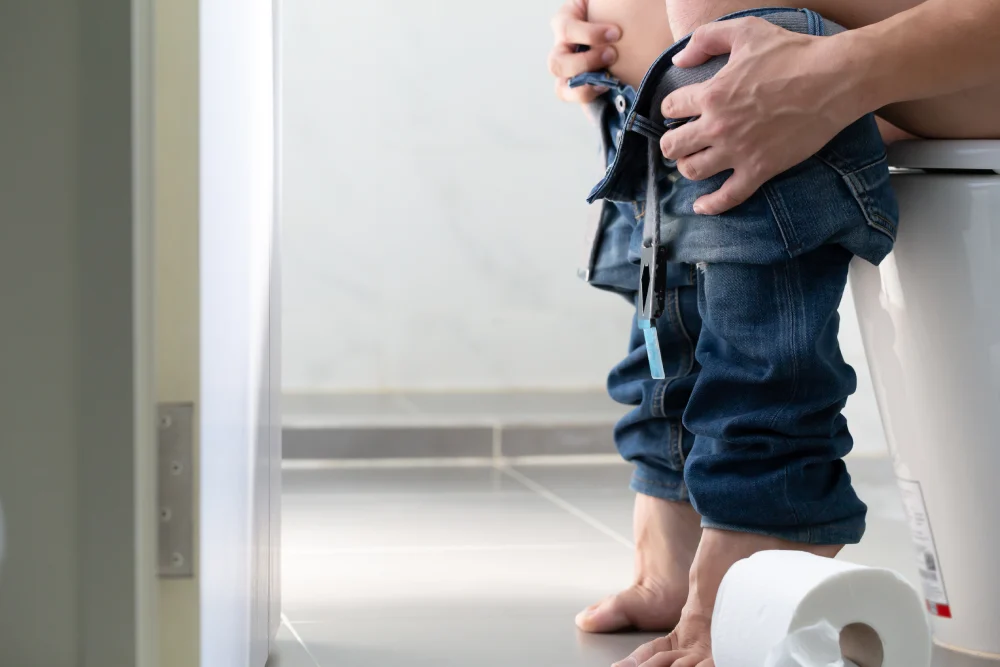
Several lifestyle habits and medical conditions can increase the risk of developing piles. Common risk factors include:
- Chronic constipation
- Straining during bowel movements
- Prolonged sitting on the toilet
- Pregnancy
- Obesity
- A low-fibre diet
- Age-related weakening of supporting tissues
- Frequent heavy lifting
In many cases, piles develop due to a combination of these factors rather than a single cause.
Common Symptoms of Piles
The symptoms of piles vary depending on their type and severity. Common symptoms include:
- Bright red blood on toilet paper or in the toilet bowl after passing stools
- Itching or irritation around the anus
- Pain or discomfort, particularly when sitting or passing stools
- Swelling around the anus
- A lump near the anus
- A feeling of incomplete bowel emptying
- Mucus discharge after bowel movements
Although rectal bleeding is often caused by piles, it can also be associated with other gastrointestinal conditions. Therefore, persistent bleeding or changes in bowel habits should always be assessed by a doctor.
How Are Piles Diagnosed?
A diagnosis usually begins with a discussion of your symptoms followed by a physical examination of the anal region. Your colorectal surgeon will look for signs such as external piles, prolapsed piles, swelling, skin irritation or skin tags.
If further assessment is required, additional investigations may include:
- Digital Rectal Examination: A gloved, lubricated finger is gently inserted into the rectum to assess for internal piles or other abnormalities.
- Anoscopy: A short, lighted instrument is used to examine the lining of the anal canal and lower rectum.
- Sigmoidoscopy: A specialised scope allows examination of the rectum and lower part of the colon to evaluate haemorrhoids and exclude other conditions where appropriate.
Treatment Options for Piles
Treatment depends on the severity of symptoms, the grade of the piles and how much they affect your daily life. Piles that do not produce symptoms often do not require treatment.
Conservative Treatment
For first- and second-degree piles, symptoms can often be managed by reducing straining during bowel movements. This may involve increasing fluid intake, improving dietary fibre intake or using laxatives where appropriate. Oral medication or suppositories may also be prescribed to help relieve symptoms.
Medication
Topical creams, ointments or suppositories may temporarily relieve itching, discomfort and inflammation. Oral medications or stool softeners may also be recommended to make bowel movements easier and reduce straining.
Non-Surgical Procedures
If symptoms persist despite conservative treatment, minimally invasive procedures may be recommended. These include:
- Rubber Band Ligation: A small rubber band is placed around the base of the internal pile to cut off its blood supply, causing it to shrink and fall off.
- Sclerotherapy: A solution is injected into the tissue around the pile, causing it to shrink.
- Ultrasound-guided Haemorrhoidal Artery Ligation (HAL): An ultrasound probe identifies the arteries supplying the haemorrhoid, allowing them to be tied off to reduce blood flow and shrink the piles.
Surgery
Third- and fourth-degree piles, or second-degree piles that have not responded to other treatments, may require surgery.
Surgical options include:
- Conventional Haemorrhoidectomy: The enlarged haemorrhoidal tissue is removed through a surgical incision.
- Stapled Haemorrhoidectomy: The prolapsed haemorrhoidal tissue is repositioned and secured using a circular stapling device. This approach is generally associated with less postoperative pain than conventional haemorrhoidectomy.
- Laser Haemorrhoidectomy: A laser is used to remove the haemorrhoidal tissue in a manner similar to conventional surgery. Despite common misconceptions, current evidence does not show it offers less pain or superior outcomes compared with standard surgical techniques.
Effective Treatment of Piles Begins with the Right Diagnosis
Although piles are common, they should not be dismissed as something you simply have to live with. Seeking medical assessment early allows suitable management to begin before symptoms become more troublesome.
At Ho Kok Sun Colorectal, a colorectal clinic in Singapore, patients receive a comprehensive assessment to determine the most appropriate treatment for their condition. Under the care of Dr Ho Kok Sun, treatment is tailored to the type and severity of the piles, whether this involves lifestyle measures, minimally invasive procedures or surgery. If you are experiencing persistent symptoms or rectal bleeding, arrange a consultation and discuss your treatment options today.
Frequently Asked Questions (FAQs) About Piles Treatment
Can untreated piles lead to complications?
Does every prolapsed pile require surgery?
Can more than one piles treatment be needed?
Meet Our Colorectal Surgeon

Dr Ho Kok Sun
Consultant Colorectal & General Surgeon
MBBS (Singapore), M Med (General Surgery) (Singapore)
FRCS (General Surgery) (Edinburgh), FAM (Singapore)
Dr Ho Kok Sun has been committed to treating colorectal cancer through minimally invasive surgical techniques for over two decades. Dr Ho was previously President of the ASEAN Society of Colorectal Surgeons and the Society of Colorectal Surgeons (Singapore), as well as a founding member of the Eurasian Colorectal Technologies Association. Dr Ho was actively involved in the training of medical students and residents and has published widely in reputable journals and book chapters. He believes that treatment should always be personalised to the patient’s needs.