





Your Colorectal Health, Our Priority
With our comprehensive suite of screening services and treatment options, our experienced colorectal specialist and medical team promise you peace of mind whilst ensuring a strong and healthy colon.




Dr Ho Kok Sun
Consultant Colorectal & General Surgeon
When surgery is recommended for a colorectal condition, many patients wonder whether a minimally invasive procedure or traditional open surgery is the better option. While minimally invasive techniques have become increasingly common, they are not suitable for every condition or every patient.
The most appropriate surgical approach depends on several factors, including the condition being treated, its severity, your overall health and the complexity of the procedure. Understanding how these approaches differ can help you have a more informed discussion with your colorectal surgeon.
Key Takeaways
- Minimally invasive and open colorectal surgery each have an important role in treatment.
- The most appropriate approach depends on your condition, overall health and surgical complexity.
- Minimally invasive surgery may offer a smaller incision and faster recovery for suitable patients.
- Open surgery may be recommended for more complex conditions or where greater surgical access is required.
What Is Minimally Invasive Colorectal Surgery?
Minimally invasive colorectal surgery is performed through several small incisions using specialised instruments and a camera, rather than a single larger incision. Depending on the procedure and your condition, your colorectal surgeon may recommend one of the following approaches:
- Laparoscopic Surgery: The surgeon performs the operation using long, specialised instruments while viewing the surgical field on a high-definition monitor.
- Robotic-assisted Surgery: The surgeon controls robotic instruments from a console, providing enhanced precision and dexterity during selected procedures.
What Is Traditional Open Colorectal Surgery?
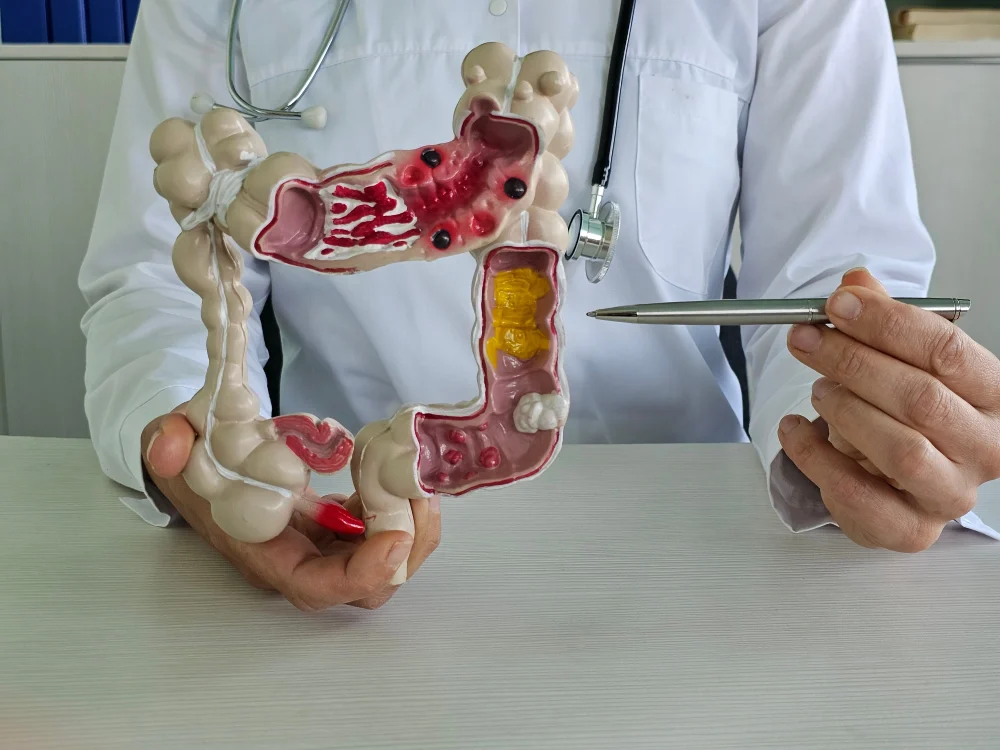
Open colorectal surgery involves a larger incision that allows direct access to the abdominal cavity. Although recovery may take longer than with minimally invasive surgery, it remains an important and well-established approach for many colorectal conditions.
Open surgery may be recommended when:
- The condition is particularly complex
- Extensive disease is present
- Previous abdominal surgery has resulted in significant scar tissue
- A minimally invasive approach is unlikely to provide the safest or most effective outcome
How Do They Compare?
Both minimally invasive and traditional open surgery aim to treat colorectal conditions safely and effectively. The main differences include:
- Incisions: Minimally invasive surgery uses several small incisions, while open surgery requires a larger abdominal incision.
- Recovery: Suitable patients undergoing minimally invasive surgery may experience less discomfort and a quicker recovery, although this varies between individuals.
- Hospital Stay: Minimally invasive procedures are often associated with shorter hospital stays, while open surgery may require a longer admission depending on the operation.
- Suitability: Minimally invasive surgery is not appropriate for every condition. Open surgery may be the preferred approach for more complex procedures or when greater surgical access is needed.
How Does Your Surgeon Decide?
Choosing between minimally invasive and open surgery is based on careful clinical assessment rather than patient preference alone.
Your colorectal surgeon will consider factors such as:
- Your diagnosis
- The size and location of the disease
- Previous abdominal operations
- Your general health
- The expected complexity of the procedure
- Whether minimally invasive surgery can be performed safely
The primary goal is always to achieve the safest operation while providing the best possible long-term outcome.
Choosing the Most Appropriate Surgical Approach
Both minimally invasive and traditional open colorectal surgery are established techniques with an important role in modern colorectal care. Rather than focusing on which approach is considered "better", the priority is selecting the technique that is most appropriate for your individual condition and supports the safest possible outcome.
At Ho Kok Sun Colorectal, a colorectal clinic in Singapore, patients receive a comprehensive surgical assessment and personalised recommendations from Dr Ho Kok Sun based on their diagnosis, medical history and clinical findings. Whether you have been advised to undergo colorectal surgery or would like a second opinion, arrange a consultation to better understand your treatment options and the approach most suitable for your condition.
Frequently Asked Questions (FAQs) About Colorectal Surgery
Can surgery begin as minimally invasive and change to open surgery?
Will I need a stoma after colorectal surgery?
Can I eat normally after colorectal surgery?
Meet Our Colorectal Surgeon

Dr Ho Kok Sun
Consultant Colorectal & General Surgeon
MBBS (Singapore), M Med (General Surgery) (Singapore)
FRCS (General Surgery) (Edinburgh), FAM (Singapore)
Dr Ho Kok Sun has been committed to treating colorectal cancer through minimally invasive surgical techniques for over two decades. Dr Ho was previously President of the ASEAN Society of Colorectal Surgeons and the Society of Colorectal Surgeons (Singapore), as well as a founding member of the Eurasian Colorectal Technologies Association. Dr Ho was actively involved in the training of medical students and residents and has published widely in reputable journals and book chapters. He believes that treatment should always be personalised to the patient’s needs.