


Your Colorectal Health, Our Priority
With our comprehensive suite of screening services and treatment options, our experienced colorectal specialist and medical team promise you peace of mind whilst ensuring a strong and healthy colon.




Dr Ho Kok Sun
Consultant Colorectal & General Surgeon
Bowel symptoms can be easy to dismiss when they cause little discomfort or only occur occasionally. A change in bowel habits, for example, may seem manageable enough to leave alone. However, the severity of a symptom does not always reflect its clinical significance. Persistent or recurring changes may warrant further investigation, particularly when other risk factors are present.
A colonoscopy allows the colon and rectum to be examined directly for abnormalities that may not be apparent from symptoms alone. Whether the procedure is appropriate depends on the nature of the symptoms and the wider clinical findings. In some cases, another investigation or a period of monitoring may be more suitable.
Key Takeaways
- Mild or occasional bowel symptoms do not automatically require a colonoscopy, but persistent or unexplained changes may warrant further investigation.
- Personal and family medical history, along with abnormal screening results, can influence whether a colonoscopy is recommended.
- A colonoscopy can identify abnormalities in the colon and rectum, with biopsies or polyp removal performed when appropriate.
- The findings can help determine whether treatment, further investigation or ongoing surveillance is needed.
Why Might Mild or Occasional Bowel Symptoms Still Need Investigation?
The need for further investigation depends on more than how severe a bowel symptom feels. Its duration, whether it represents a change from your usual bowel habits and any relevant medical history can influence whether a colonoscopy is appropriate.
Symptoms That Persist or Keep Returning
Persistent diarrhoea or constipation, changes in bowel habits, rectal bleeding and recurring abdominal pain may warrant further assessment. Unexplained iron deficiency anaemia or unintentional weight loss can also indicate a need for investigation, even when bowel symptoms are minimal.
These symptoms can have several possible causes and do not necessarily indicate a serious colorectal condition.
Your Individual Risk Factors
Personal and family medical history can influence the decision to recommend a colonoscopy. A previous history of colorectal polyps or colorectal cancer may require surveillance, even in the absence of significant symptoms.
A family history of colorectal cancer and certain inherited conditions can also increase the need for investigation. Existing inflammatory bowel disease may require colonoscopic assessment to monitor inflammation or check for complications.
Abnormal Screening Results
An abnormal screening result may warrant a colonoscopy even when bowel symptoms are mild or absent. For example, a positive faecal immunochemical test (FIT) indicates that blood has been detected in the stool and generally requires follow-up colonoscopy to investigate the possible source.
A positive result does not necessarily indicate colorectal cancer, but it should not be dismissed simply because you feel well.
What Can a Colonoscopy Help Detect or Diagnose?
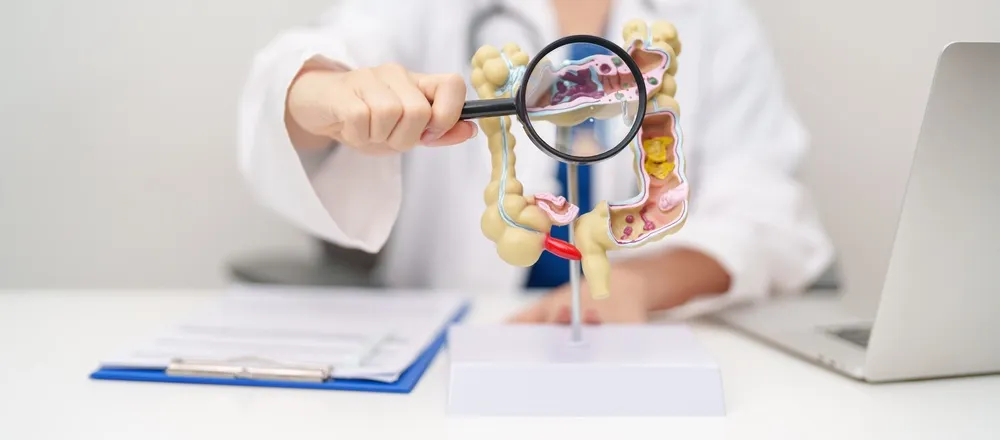
A colonoscopy allows direct examination of the colon and rectum to identify abnormalities that may explain bowel symptoms or require further investigation. Biopsies can be taken when needed, and certain findings, such as polyps, may be treated during the procedure.
Colorectal Polyps
Colorectal polyps are growths that develop on the lining of the colon or rectum. Most are non-cancerous, although certain types can develop into colorectal cancer over time. Many polyps can be removed during a colonoscopy and examined in a laboratory to determine their type and whether further surveillance is needed.
Inflammatory Bowel Disease
Crohn's disease and ulcerative colitis can cause inflammation in the digestive tract. A colonoscopy can reveal changes in the bowel lining and help assess the extent of inflammation. Biopsies may also support the diagnosis and help distinguish inflammatory bowel disease from other conditions.
Diverticular Disease
Diverticula are small pouches that form in the wall of the colon and become more common with age. They can be identified during a colonoscopy, although their presence does not necessarily explain a patient's symptoms.
Following an episode of diverticulitis, a colonoscopy may be recommended once the inflammation has resolved, particularly when further examination is needed to exclude other colorectal conditions.
Sources of Colorectal Bleeding
A colonoscopy may help identify the source of rectal bleeding, blood in the stool or unexplained iron deficiency anaemia. Possible findings include inflamed tissue, vascular abnormalities or bleeding polyps. However, not all gastrointestinal bleeding originates in the colon, and additional investigations may sometimes be necessary.
Colorectal Cancer
A colonoscopy can identify suspicious growths or changes in the bowel lining that may indicate colorectal cancer. Tissue samples can be taken for laboratory examination to confirm the diagnosis. If cancer is detected, further investigations may be required to determine its extent and guide treatment planning.
Why Can Timely Investigation Matter Even When Symptoms Are Mild?
The severity of bowel symptoms does not always reflect the extent of an underlying condition. Some colorectal conditions, including polyps and early colorectal cancer, may cause few noticeable symptoms. Waiting for symptoms to become more troublesome can therefore delay the identification of abnormalities that warrant medical attention.
When a colonoscopy is clinically indicated, undergoing the procedure within the recommended timeframe can help avoid unnecessary delays in diagnosis. This may be particularly important when an abnormal screening result or other clinical finding raises concern, even if bowel symptoms are minimal.
Timely investigation can also help establish whether treatment is necessary or whether further assessment should focus on other possible causes. The appropriate timing depends on the reason for the colonoscopy and the urgency of the clinical findings.
Find Out Whether Your Bowel Symptoms Need Further Investigation
If you are unsure whether a change in bowel habits warrants a colonoscopy, the decision should take into account more than how troublesome the symptoms feel. Assessment can help establish whether colonoscopy is appropriate or whether another approach would be more suitable.
At our colorectal clinic in Singapore, Dr Ho Kok Sun provides assessment for bowel symptoms and colonoscopy when clinically appropriate. If you have noticed an unexplained change or have been advised to undergo further colorectal investigation, arrange a consultation to discuss whether a colonoscopy is necessary.
Frequently Asked Questions (FAQs) About Colonoscopies
Can I choose sedation for my colonoscopy?
Sedation may be offered during a colonoscopy to improve comfort. Available options depend on your medical history and the facility where the procedure is performed. The appropriate type of sedation, including whether it is suitable for you, can be discussed before the procedure.
What happens if a biopsy is taken during a colonoscopy?
A biopsy involves collecting a small tissue sample from the bowel lining for laboratory examination. Laboratory examination can help identify inflammation or determine whether suspicious tissue contains cancer cells. Biopsy results are usually available after the procedure rather than immediately, and the findings can help determine whether further assessment or treatment is needed.
How long does it take to recover after a colonoscopy?
Most patients can resume light activities after the procedure, although temporary bloating or gas may occur. If sedation is used, driving, operating machinery and making important decisions should generally be avoided for 24 hours. Recovery instructions may differ if polyps are removed or other interventions are performed.
Can a colonoscopy examine the entire bowel?
A colonoscopy examines the rectum and colon, which are parts of the large intestine. It may also allow examination of a short section of the terminal ileum, but it does not assess most of the small intestine or the upper digestive tract. Other investigations may be recommended if symptoms suggest a problem outside the areas examined.
Meet Our Doctor

Dr Ho Kok Sun
Consultant Colorectal & General Surgeon
MBBS (Singapore), M Med (General Surgery) (Singapore)
FRCS (General Surgery) (Edinburgh), FAM (Singapore)
Dr Ho Kok Sun has been committed to treating colorectal conditions through minimally invasive surgical techniques for over two decades. Dr Ho was previously President of the ASEAN Society of Colorectal Surgeons and the Society of Colorectal Surgeons (Singapore), as well as a founding member of the Eurasian Colorectal Technologies Association. Dr Ho was actively involved in the training of medical students and residents and has published widely in reputable journals and book chapters. He believes that treatment should always be personalised to the patient’s needs.